


Meeting with an Astronomy Enthusiast
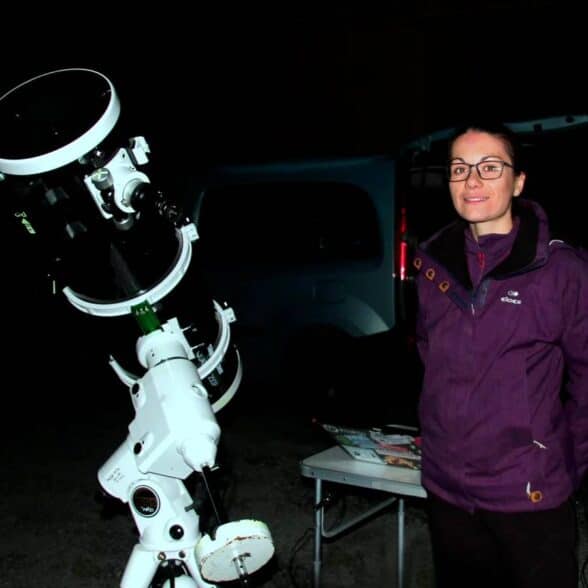
Nothing suggested that Élodie Chaves would become an astronomy educator.
She moved to the Haute Maurienne Vanoise region in 2007, and it was while working at the tourist office that she discovered a true passion for the stars by leading sessions at a planetarium (a sort of igloo where the starry sky is projected).
"At first, it wasn't easy. Astronomy requires a great deal of knowledge."
Determined to learn more, she studied at the Paris Observatory and then at the French Astronomy Association. A few years later, she founded Les Étoiles des Cimes and began offering stargazing evenings at the Auberge de Bellecombe.
Today, she’s leading workshops across the entire “ Haute Maurienne Vanoise ” and is going to answer all of our questions!
Why is the " Haute Maurienne Vanoise " a paradise for stargazing?
The mountains offer ideal conditions for stargazing.
Thanks to its elevation and very low light pollution, the “ Haute Maurienne Vanoise ” offers some truly beautiful spots for stargazing. Here, the villages are far from urban areas, and the wide-open spaces quickly fall into darkness once night falls.
Using a device capable of measuring the quality of the night sky, Élodie regularly compares different locations in the valley. Some stand out for their exceptional darkness.
Here are his three favorite places to stargaze:
1. Le Plan du Lac – Val Cenis
In the heart of Vanoise National Park, Plan du Lac boasts one of the darkest skies in the entire valley.
2. The hamlet of L'Écot – Bonneval-sur-Arc
This small traditional hamlet is perched in an exceptional setting, at an altitude of 2,000 meters.
"The site is in a valley. The stars are very clearly visible because there is virtually no light pollution."
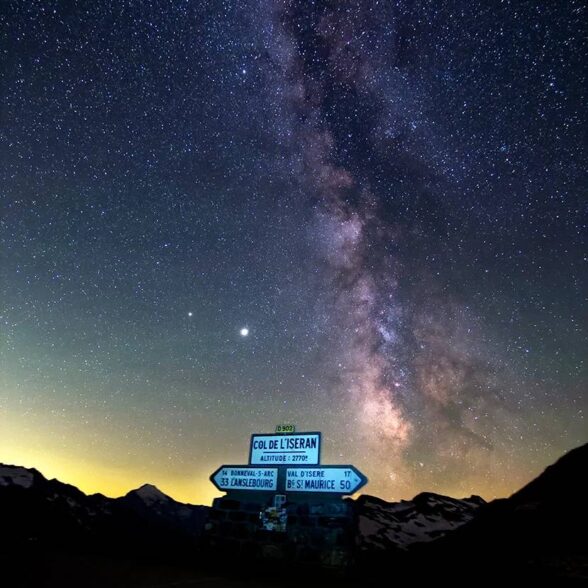
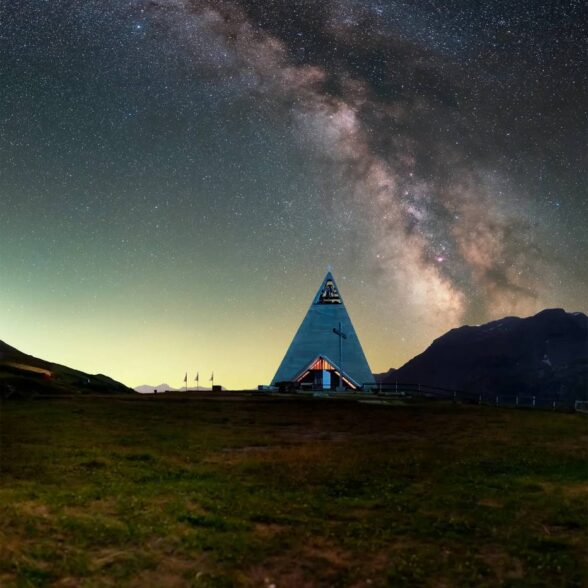
3. The Mont-Cenis Plateau and theIseran Pass
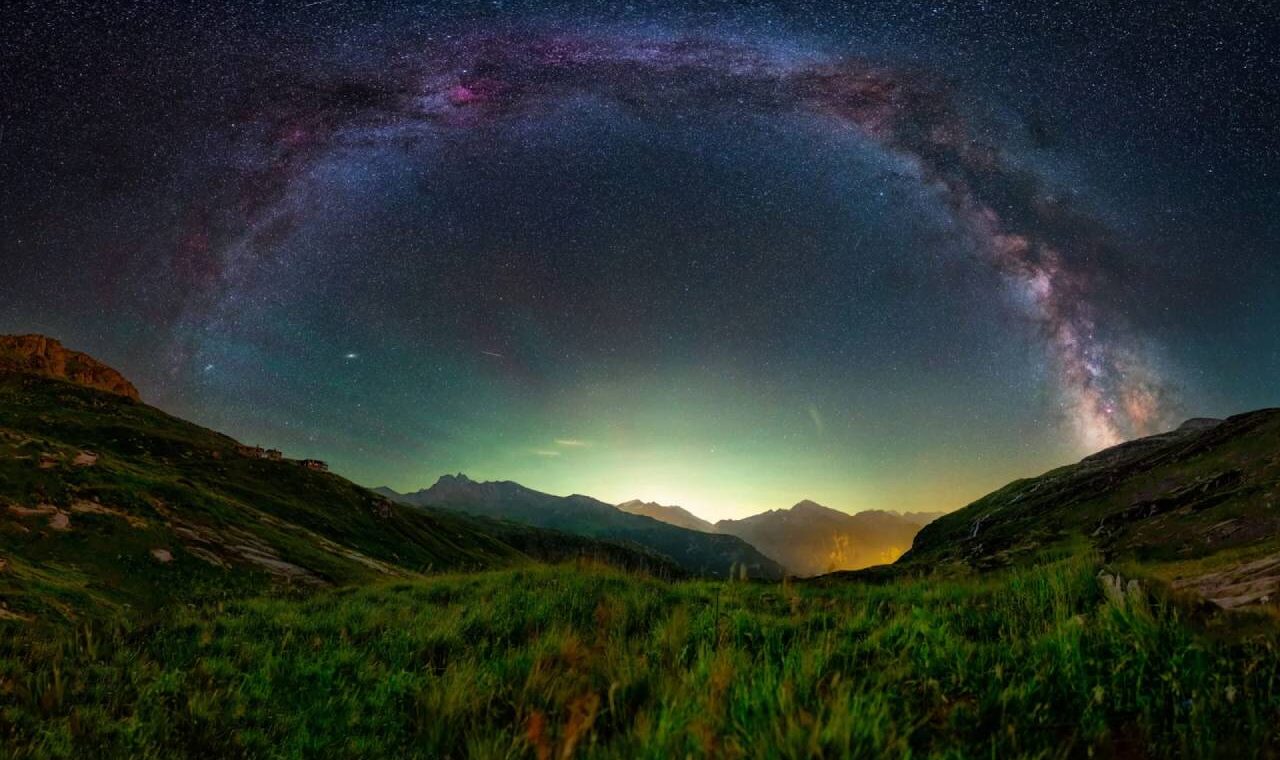
With their sweeping views, the Mont-Cenis Plateau and the Col de l’Iseran offer ideal conditions for observing the Milky Way. These two high-altitude sites reveal a spectacular sky, perfect for contemplation.
"I'm grouping them together because, at both of these locations, the lights of Turin sometimes cast a faint glow on the horizon."
When is the best time to stargaze in Haute Maurienne?
The good news is that you can enjoy a dark, starry sky all year round.
“It all depends on what you want to observe,” explains Élodie.
Each season reveals a different sky. In summer, you can admire constellations such as Cygnus, Scorpius, Sagittarius, and Aquila. In winter, the sky gives way to Orion, Taurus, the Pleiades, and Sirius, the brightest star in the night sky.
There’s really only one rule that matters: choose a clear night that’s as dark as possible. Moonless nights offer the best viewing conditions. To fully enjoy the show, also stay away from streetlights and any sources of light pollution.
The Perseids: August's Must-See Event
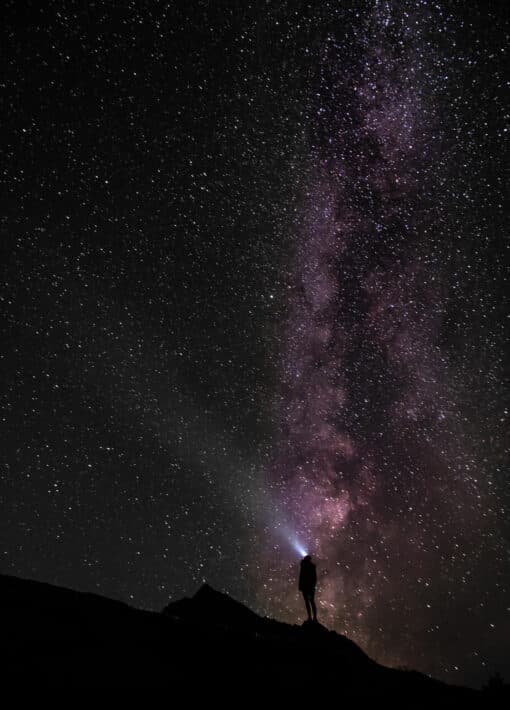
If we had to pick just one astronomical event of the year, it would be this one.
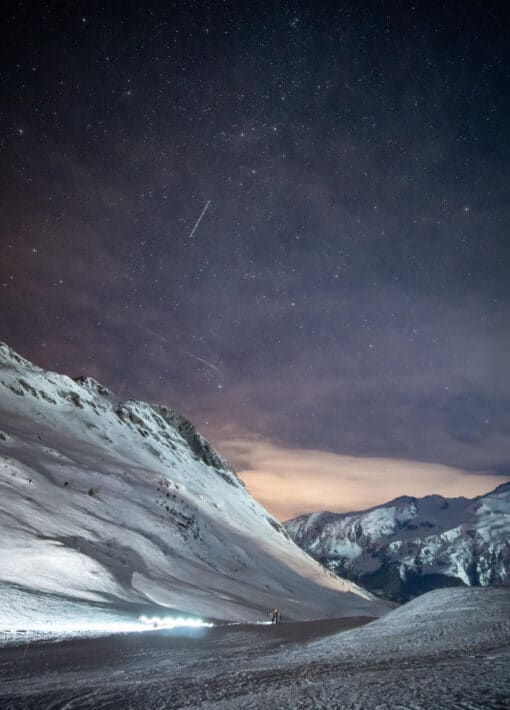
Every year, around August 10, 11, and 12, the Perseids offer one of the most beautiful meteor showers visible in the Northern Hemisphere.
Their name comes from the constellation Perseus, from which the meteors appear to originate.
Élodie still remembers one evening that has remained etched in her memory.
“I was leading a workshop at the Bellecombe Inn. It was a moonless night—it was perfect; everyone was in awe. We could see shooting stars everywhere. It was an incredible experience.”
What is an observation evening like?
Contrary to popular belief, an astronomy night isn't just about looking through a telescope.
The main goal is to learn how to read the sky and identify the stars.
Élodie often begins by inviting participants to identify a few points of reference on their own.
“For example, I ask them to look for the Big Dipper or the Little Dipper. They quickly realize that they already know a lot.”
Using a laser, she then draws the constellations directly in the sky and tells their stories. With the mnemonic devices provided, you’ll be able to recognize them on your own.
Depending on the weather, the evening may also take place inside an inflatable planetarium—a truly immersive theater where you can learn more about the sky before heading outside to stargaze.
When the sky is clear, participants can observe various celestial objects through a telescope: star clusters, nebulae, planets, and even galaxies, depending on the time of year.
As the evening goes on, we also learn why some stars seem brighter than others, how long it takes for their light to reach us, and how to find our way using the constellations.



Élodie's Tips for a Perfect Evening Under the Stars
- Dress warmly
Even in the middle of summer, temperatures drop rapidly at higher elevations.
"We'll be standing still for a long time. It's better to bring an extra layer of clothing than to spend the evening shivering. A down jacket, a blanket, and warm shoes are a must!"
- Protect Your Night Vision
To help you find your way, use a red light, which prevents glare for you and others. You can set up a red flashlight right on your phone using apps like Light for Night Vision.
- Take your time
Astronomy encourages us to slow down: “It’s a contemplative activity. You have to be willing to take the time to observe.”
Ready to experience the sky in a whole new way?
Looking up at the dark, starry sky is already a special experience. But understanding what we’re seeing completely changes the way we view the sky.
Through astronomy workshops, people of all ages can discover the constellations, the planets, and the great mysteries of the universe in a friendly atmosphere that’s accessible to everyone.
Que vous séjourniez en Haute Maurienne Vanoise en plein été ou au cœur de l’hiver, les soirées d’observation sont proposées tout au long de l’année et offrent une façon originale de découvrir la montagne une fois la nuit tombée.
Pour connaître la date des prochaines soirées, rendez-vous sur l’agenda des animations.
Une expérience à vivre au moins une fois lors de votre séjour en Haute Maurienne Vanoise pour ralentir, retrouver son âme d’enfant et prendre conscience de l’immensité de l’Univers.
Vanoise National Park
Where can you see marmots in the heart of the Alps?