Vanoise National Park

The Vanoise National Park, France’s first national park, which celebrated its 60th anniversary in 2023, covers a large part of the Haute Maurienne Vanoise region. Enjoy this haven of peace, far from any pollution, and savor the calm, the silence, and the fresh air. Discover this remarkable and unspoiled environment with a park ranger or a mountain guide, and expand your knowledge of the local flora and fauna.

France's 1st national park

A National Park created in 1963

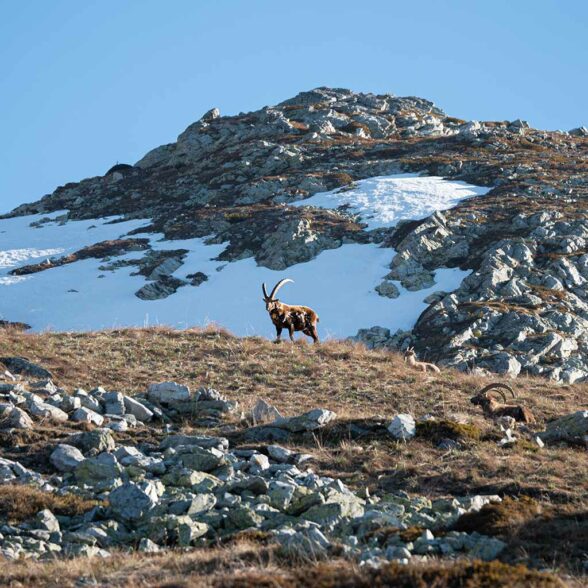
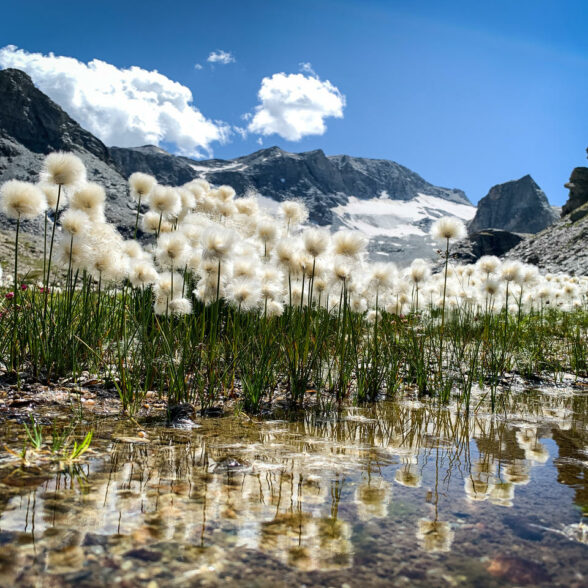
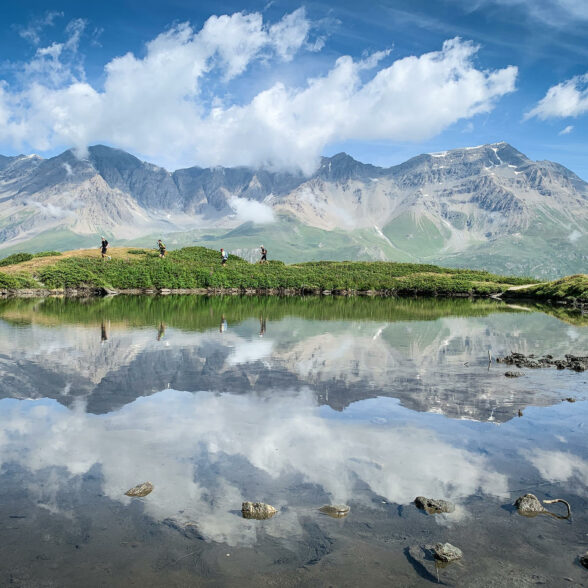
In the heart of Vanoise National Park, you’ll easily come across marmots from April to September. You can also spot ibex, high-altitude lakes, and the Vanoise glaciers… A natural retreat to explore year-round, on foot, on snowshoes, or on cross-country skis.

The Vanoise National Park is a protected area, located largely within the Haute Maurienne Vanoise region, established in 1963 thanks in large part to Gilbert André, then mayor of Bonneval-sur-Arc. The central zone, known as the “heart,” is a fully protected area governed by regulations designed to promote biodiversity in landscapes, habitats, and species, and to preserve the cultural and mountain heritage.

Just a short walk away, you’ll find yourself in the heart of France’s first national park and one of Europe’s largest protected areas. The Vanoise National Park borders Italy’s Gran Paradiso National Park. Together, they form one of the largest protected areas in the Western Alps. For decades, ibex and chamois, for example, have been able to move freely between the two parks.

To make the most of your visit, discover the attractions, activities, and service providers in Haute Maurienne Vanoise with the “Esprit Parc” label.

Discover the official Vanoise National Park website
 

HMV_decouvrir-environnement-floconvert
HMV_decouvrir-environnement-faune

Richness and diversity of wildlife

Ibexes, chamois, marmots, eagles, bearded vultures...

The wealth of wildlife in the Vanoise National Park is undeniable. The Park is home to large ungulates as well as birds, insects and amphibians.

Herbivores (deer, roe deer, chamois, and ibex—all of which are found in the Vanoise), rodents (such as the mountain hare, which changes its coat with the seasons; the marmot; and various voles, including the snow vole and the collared vole), carnivores (the fox, badger, marten, stone marten, the ermine), bats (the common pipistrelle, the northern long-eared bat), and insectivores such as the water shrew are widely found in the heart of Vanoise National Park. Some animals are easy to spot, such as the marmot or the ibex. For others, you’ll need patience, a bit of luck, and a good pair of binoculars.

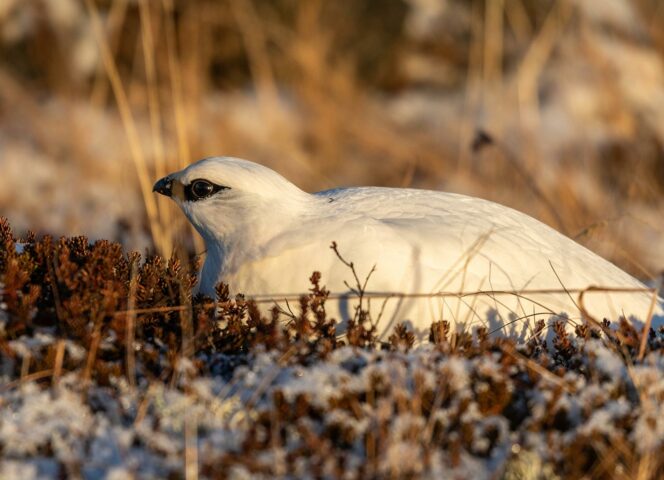
Among the 125 species of birds that nest in the Vanoise are the golden eagle, the crossbill, the nutcracker, the Tengmalm’s owl, the black-capped flycatcher, the eagle owl, the rock thrush, the rock sparrow, the black grouse, the rock partridge, the rock ptarmigan, the black woodpecker, the three-toed woodpecker (found in France only in Savoie and Haute-Savoie), and the wallcreeper.

You might be lucky enough to see the massive bearded vulture, one of Europe’s largest birds, flying overhead. This vulture, which feeds on bones, nests in the inaccessible cliffs near Val Cenis-Termignon and Bessans.

Visit the exhibition (free admission) of “La Maison de la Vanoise” in Val Cenis-Termignon to learn more about the bearded vulture and the entire Vanoise National Park.

Extraordinary flora

A third of France's flora can be found in Vanoise

The latest comprehensive survey of France’s flora, *Flora Gallica*, published in 2014, lists approximately 5,000 species of vascular plants (ferns and fern-like plants, conifers, and flowering plants) in metropolitan France. The Vanoise Massif alone is home to 1,700 species—a third of France’s flora —covering less than 0.5% of the country’s total land area!

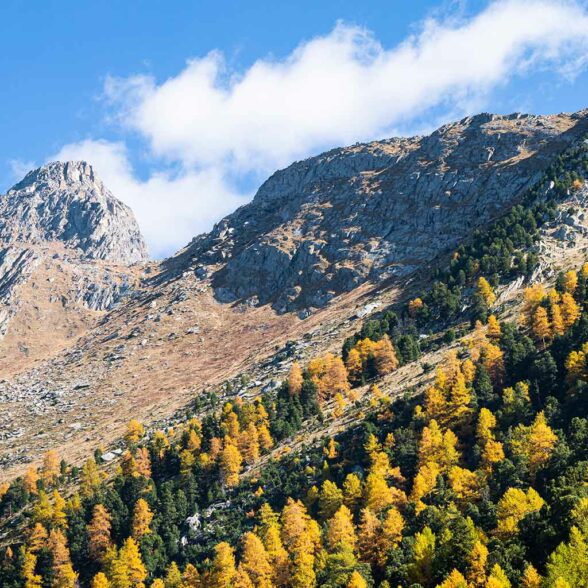
This exceptional diversity is due to the variety of habitats found here. Situated on the border between the Northern and Southern Alps, the Haute Maurienne Vanoise alpine pastures, dry grasslands, wetlands, and high-altitude areas. The different types of rock found here also provide ideal habitats for a wide variety of species.

HMV_decouvrir-environnement
HMV_decouvrir-environnement-parc

Adopt the "Parc attitude

To take full advantage of the Vanoise National Park, respect the environment and the Park's rules.

  • Come onfoot, without your dog (even on a leash), and leave your mountain bike and paraglider at home (although some routes in Aussois and Val Cenis are accessible to mountain bikes and bicycles).
  • Admirethe beauty of flowers without picking them - they won't grow back in your home.
  • Feedon tasty local produce, but don't feed the groundhogs!
  • Optimizeyour water and electricity consumption in refuges
  • Be inspired bynature and respect it
  • Followthe trails and don't cut the laces on the way down.
  • Takethe shuttles instead of your car

A walk or hike in the heart of the Vanoise National Park offers a superb experience of nature. Open up this extraordinary picture book with your children, arouse their curiosity and make them aware of the environment and respect for it... That's what a real mountain vacation is all about!

A privileged encounter with nature

The park rangers at Vanoise National Park, whose duties are wide-ranging, are offering a series of events throughout the summer to introduce you to their work and help you uncover the secrets of the natural world around us.

Don’t hesitate to reach out to mountain guides certifiedunder the “Esprit Parc” program. While ensuring your safety on snow-covered trails, they’ll capture your attention, spark your curiosity, and inspire you to learn more about the mountain environment.

With them, you'll be able to meet the animals without disturbing the wildlife, learn more about the survival techniques of flora and fauna in winter, and see the effects of climate change by discovering high-altitude lakes that didn't exist just a few years ago...

Check out the outings, walks, and hikes—in both summer and winter—offered by the guides and tour leaders of Haute Maurienne Vanoise.

LN_decouvrir-environnement-lagopede