

Did you know?
Behind the International Tango Festival lies a little-known story: that of the residents of Lanslebourg who set out to try their luck in South America in the 19th century.
Why did people from the Maurienne region leave their mountains to cross the Atlantic? How did their descendants reconnect with their homeland more than a century later? And why has tango become a symbol of this shared heritage?
Immerse yourself in a moving human story of exile, hope, and passing on traditions.
The dream of a better life
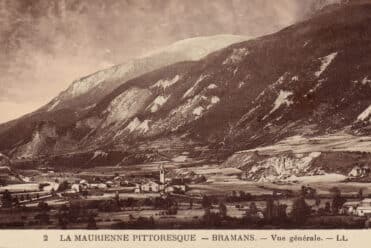
A tough life in the mountains
In the mid-19th century, life was hard in Haute Maurienne.
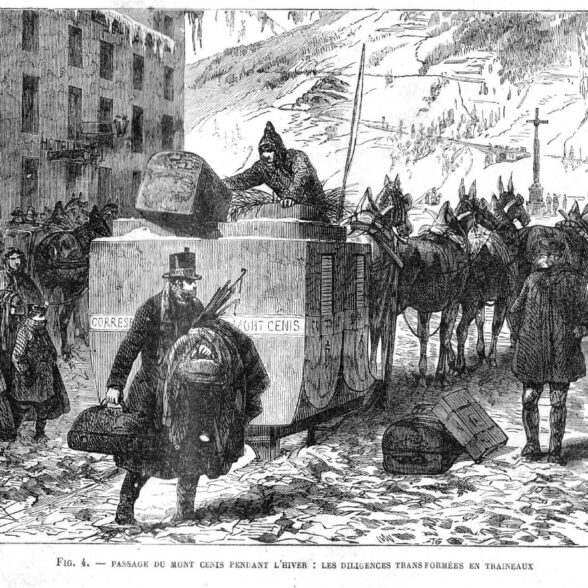
In Lanslebourg, families make their living mainly from farming, livestock raising, and services for travelers (carriage drivers, innkeepers, porters, etc.) as they pass through Mont Cenis on their way to Italy.
But the winters are long and the harvests are meager. The population is growing, and it is becoming difficult to feed everyone.
At that time, seasonal migration was already common. Many men left the valley for several months each year to work elsewhere: in Italy, Paris, or other regions of France.
But for some, that’s no longer enough: they now dream of a new life.
The end of major construction projects in Maurienne
In the 19th century, however, several major projects brought economic activity to the Maurienne region:
- The Mont-Cenis Road, commissioned by Napoleon, connects France and Italy
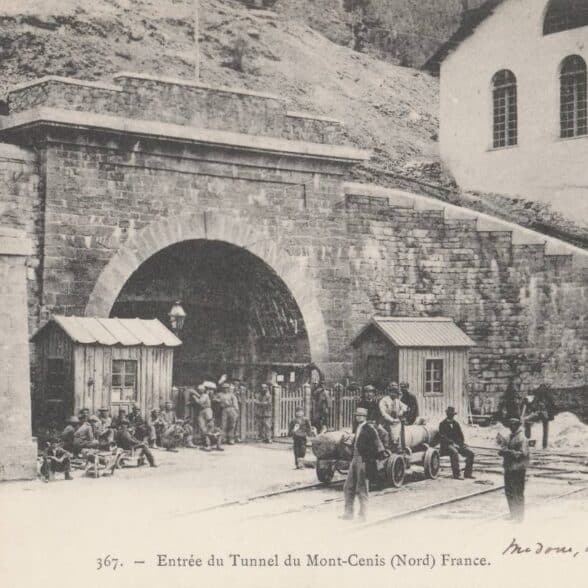
- The massive construction site of the Fréjus rail tunnel, near Modane
Hundreds of workers are flocking to the valley.
But everything changed when the construction of the railway tunnel was completed much sooner than expected, thanks to the technical innovations of engineer Germain Sommeiller. Instead of taking nearly thirty years, the project was finished in just seventeen years.
Overnight, many workers found themselves out of a job.
For some residents of Maurienne, an idea began to take shape: to go far, far away… all the way to South America.
Why move to Latin America?
The Promises of the Rio de la Plata
At that time, Argentina and Uruguay were seeking to attract European settlers to develop their vast agricultural lands.
Emigration agencies began to spring up. Newspaper ads promised a better life: land to farm, livestock, work, and the hope of a more prosperous future.
For mountain dwellers accustomed to harsh conditions, these promises are the stuff of dreams. More than 4,000 Savoyards ultimately set out on the journey to the Rio de la Plata.
In Val Cenis, applicants had to obtain a “certificate of good conduct” issued by the village priest. Some landowners, in fact, were willing to accept only Christian, Protestant, or married settlers. That is why, for example, Joséphine Suiffet married Camille Davrieux in Lanslebourg at 5 a.m., before leaving for Italy.
A three-month journey into the unknown
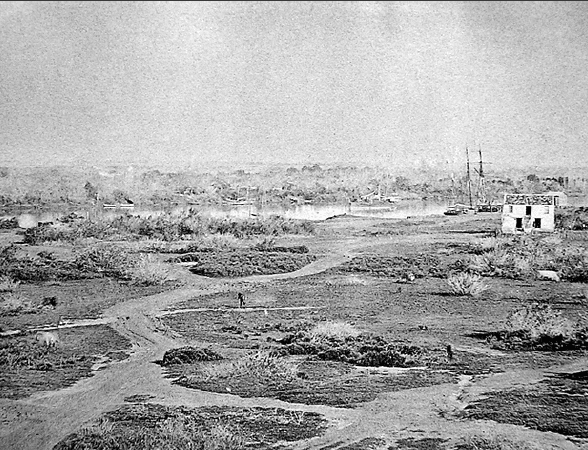
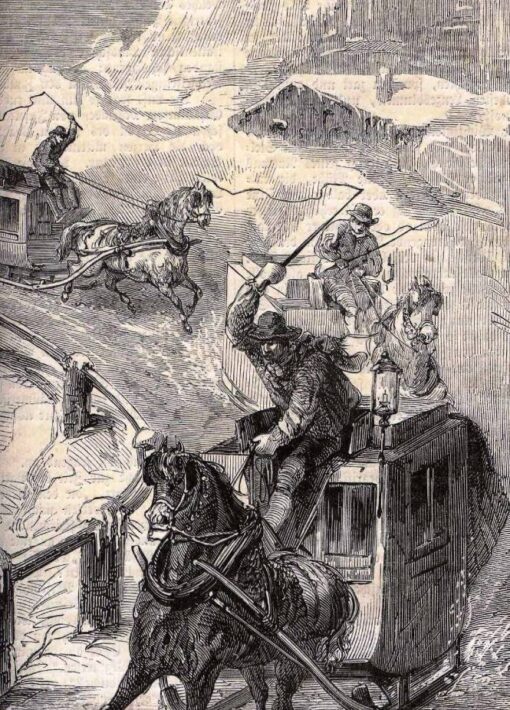
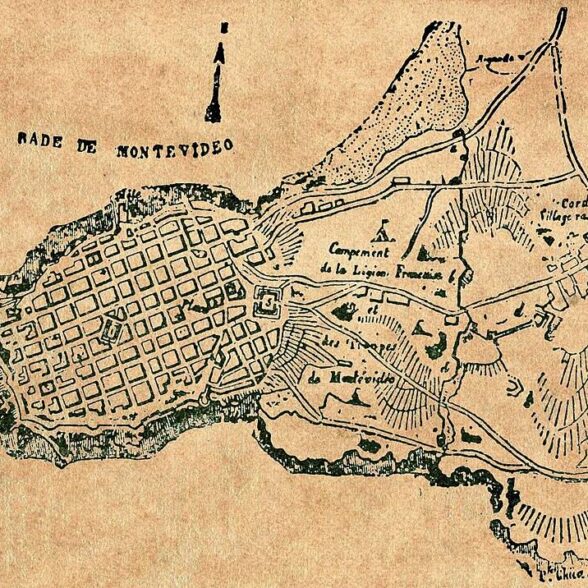
Residents of Lanslebourg who were planning to emigrate left their village by stagecoach and traveled to the Italian port of Savona. From there, they boarded a ship for a voyage lasting several months to Montevideo or Buenos Aires.
The journey is long and dangerous. Travelers may face storms, hunger, thirst, diseases such as cholera, and sometimes even shipwrecks.
Some end up in a different port than the one they had planned. Others discover upon arrival that the promised land does not exist.
Despite everything, the hope for a better life keeps these families going.
A New Life on the Argentine Plains
Once they arrive, the people of Maurienne put to use what they have always known how to do: tend herds, work the land, and live in isolated areas.
The letters they sent to their families describe this new life. In these letters, the emigrants also mention wages that were much higher than in Savoy and an abundance of food.
Maximien Dalix wrote to his mother, who had stayed behind in Lanslebourg: “I’m still out in the fields. On horseback, I tend to 1,500 sheep and 40 horses. It’s the job that suits me best. I have a boss; he’s a French Basque, and he’s a better boss than I am a servant. Only the food is passable, but I wish I could give you the pieces of leg of lamb that I give to the dog. They’d fatten your guts…”
Little by little, these positive experiences are encouraging other residents of Maurienne to follow suit.
But it’s not all rosy. For some, the longing for their hometown is overwhelming. Other migrants fall victim to scams and arrive with no money and no land. Still others will never see their mountains again.
A memory that lives on between Val Cenis and Latin America
Descendants in search of their roots
Over the generations, family ties between the two continents have gradually grown weaker.
But that memory never completely faded away.
Organizations such as Savoie Argentine or theSavoyard Association of Uruguay have been working for several years to locate the descendants of families who emigrated to Argentina and Uruguay.
This research leads to particularly moving encounters.
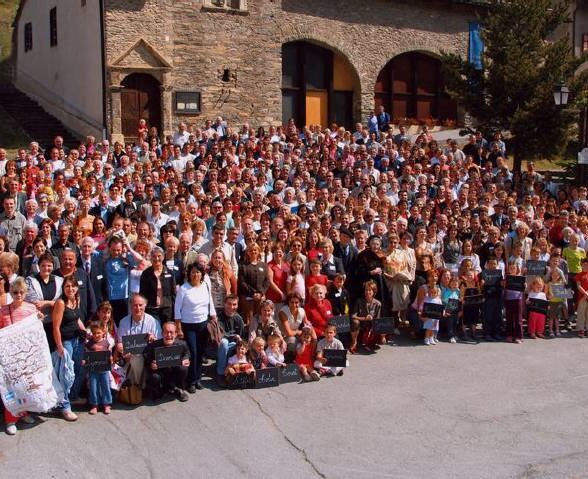
In 2002, seventy-five Savoyards traveled to Uruguay to meet cousins they had been reunited with after more than a century of separation.
For many, it is a deeply moving discovery: identical surnames, striking physical resemblances, and sometimes even a few words of the local dialect still passed down through families.

The Comic Book *The Settlers of the Rio de la Plata*
This deeply human story also inspires artists.
Screenwriter Laurent Suiffet, a resident of Val Cenis, and Uruguayan illustrator Nicolas Rodriguez Juele are collaborating on a three-volume comic book series: The Settlers of the Rio de la Plata.
The work tells the story of the departure of residents of Lanslebourg for South America in 1855.
Based on extensive historical research, this comic book helps pass on this history to new generations today.
A tango festival in Val Cenis paying tribute to this history
Tango: A Symbol of the Bond Between Savoie and Latin America
It was against this backdrop that the Val Cenis International Tango Festival.
The idea came about following meetings organized between descendants of Maurienne natives who had settled in Argentina and their cousins who had remained in Haute-Maurienne.
Tango then becomes a natural choice.
Much more than just a dance, it symbolizes the living connection between two regions separated by thousands of miles but united by a shared history.
Through music, dances, and concerts, Val Cenis pays tribute to those residents who left in search of a better life on the other side of the world.

A unique festival in the heart of the Alps
Today, the International Tango Festival has become a must-see summer event in Haute Maurienne Vanoise region.
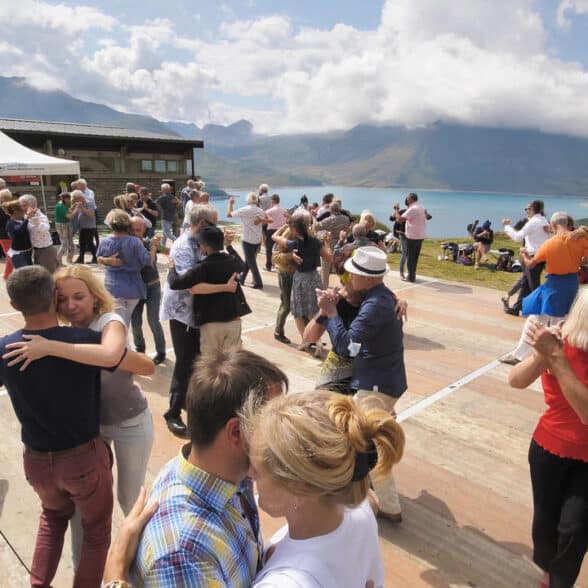
For several days, village squares, performance halls, and outdoor seating areas come alive to the rhythm of Argentine tango.
Passionate dancers, beginners, musicians, and visitors come together in a warm and friendly atmosphere.
One of the festival’s most iconic moments is undoubtedly the famous “Milonga de las Nubes, ” the Milonga of the Clouds, held at the Mont-Cenis Pass at an altitude of over 2,100 meters.
The contrast between the Savoyard mountains and the Argentine atmosphere makes the experience even more special. What makes it unique is as much its history as its setting.
Here, the tango isn’t just about Argentina. It’s also about Lanslebourg, departures, hopes, and family stories that continue to be passed down through the generations.
A story that continues to captivate Val Cenis
The Val Cenis Tango Festival is much more than a cultural event: it is a living memory.
A fresh way to tell the story of the Haute Maurienne, its people, its journeys, and its connection to the world.
Behind every note of music and every dance lie moving stories: those of the people of Maurienne who left their mountains more than 150 years ago in search of a better life.
And even today, thanks to the tango, a piece of Argentina lives on in the heart of the Alps.
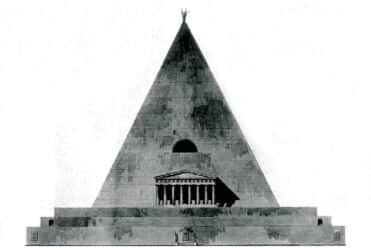
Mont Cenis: Napoleon's pyramids

The Val Cenis Tango Festival