

The importance of measuring your carbon footprint
À l’heure où la transition écologique est un enjeu majeur, savoir comment réduire son empreinte carbone devient très vite une responsabilité individuelle et collective. À Val Cenis, comme dans toute la Haute Maurienne Vanoise, le développement durable est mis à l’honneur, et ce, sur plusieurs aspects.
À titre d’exemple, les produits locaux sont privilégiés, le patrimoine naturel est préservé avec soin, et les déplacements en voiture se font de manière responsable grâce à des solutions à faibles émissions de Co2 telles que le covoiturage et le projet Blablacar Daily mis en place par la Communauté de communes de la Haute Maurienne Vanoise.
Une chaufferie de bois en circuit-court a été installée dans la station de Val Cenis : elle alimente la caserne des sapeurs-pompiers, le bâtiment de la Communauté de communes, l’Office de tourisme et l’Auditorium Laurent Gerra.
Les autres stations touristiques environnantes profitent aussi de l’hydroélectricité locale.
Pour aller plus loin, l’Office de Tourisme et la Communauté de communes organisent tout au long de l’année des ateliers et animations pour sensibiliser à ces pratiques, été comme hiver.
Things to consider
Évaluer le bilan carbone d’une journée de ski implique de considérer divers éléments.
Cela comprend le transport vers la station, l’hébergement, la nourriture consommée sur place, la location de matériel, et les activités effectuées sur les pistes. Chacun de ces aspects contribue à l’empreinte carbone totale.
En prenant conscience de ces facteurs, les vacanciers peuvent adopter des choix plus durables et minimiser leur impact environnemental tout en profitant de leur séjour à la montagne.
Carbon footprint: the example of Val Cenis
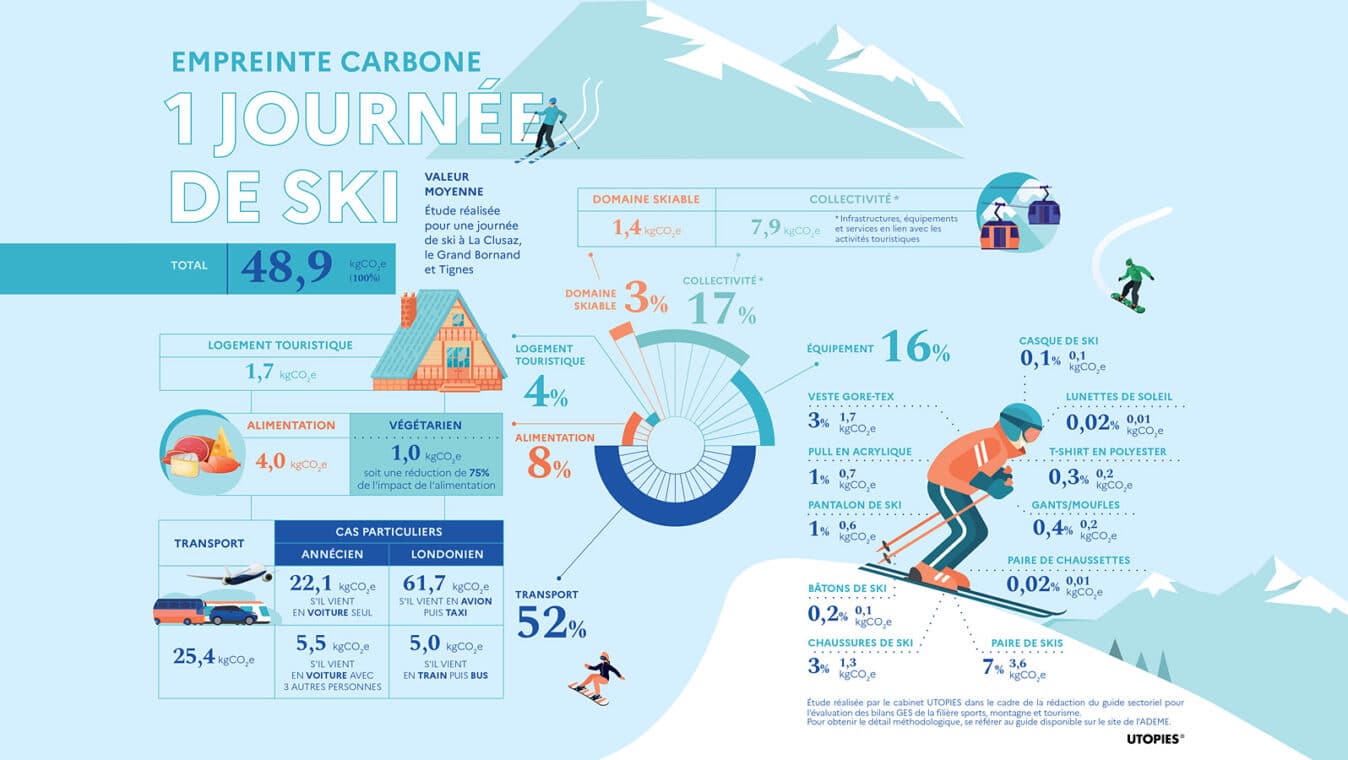
The Val Cenis resort has adapted to these concerns. Especially when you consider that the average carbon footprint of a day's skiing is equivalent to 48.9 kg of Co2 emissions*. It's not much, but we can do better!
Le domaine skiable ainsi que les collectivités (infrastructures…) ayant une empreinte carbone respective de 3 et 17%* sur le total d’une journée au ski, Val Cenis s’est engagé pour optimiser la consommation énergétique des remontées mécaniques. Notamment en jouant de l’affluence afin d’ajuster proportionnellement la vitesse et la consommation des infrastructures mais aussi en récupérant la chaleur produite par les appareils.
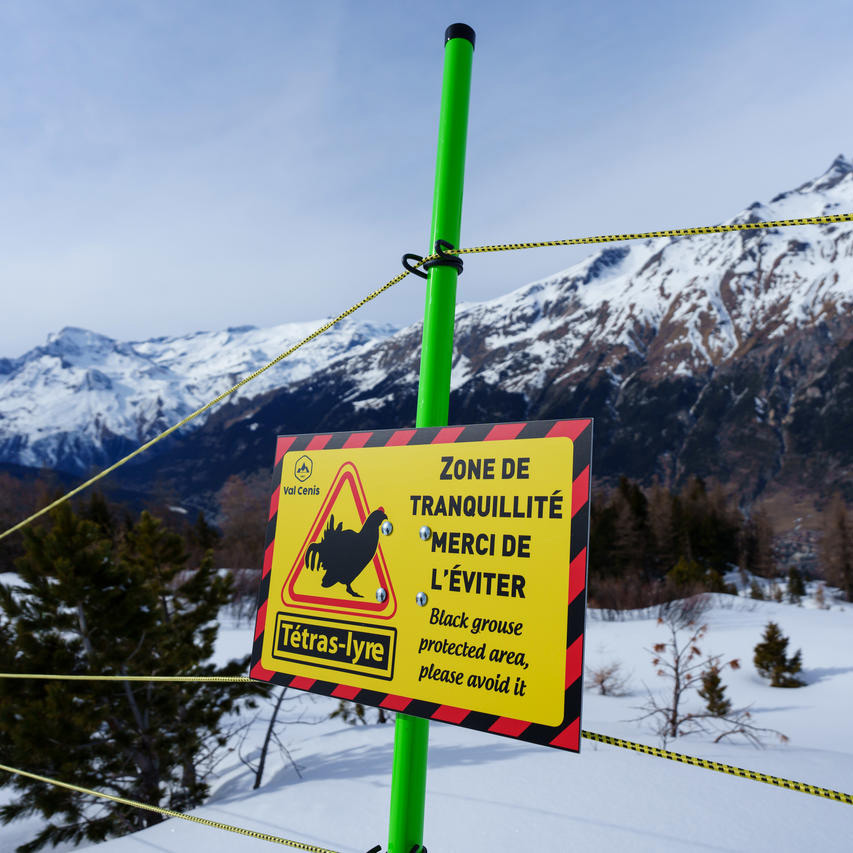
Quant à la faune et la flore, des zones de quiétudes et des aménagements sont également mis en place afin de protéger le Tétras-lyre et autres oiseaux, animaux emblématiques de la région.
Enfin, mêmes les dameuses se mettent à l’électrique ! Pionnière en France, Val Cenis s’est équipé d’une dameuse 100% électrique spécialisée pour les pistes de luge, de ski de fond et le front de neige.
How do you measure your carbon footprint?
To measure your carbon footprint, and more specifically that of a day's skiing at Haute Maurienne Vanoise, there are several online tools that enable you to make a simple, personalized estimate.
The ADEME (French Agency for Ecological Transition) website, for example, offers a simulator that lets you calculate the Co2 emissions of your journeys according to the distance covered, the mode of transport chosen, and the number of passengers. It also assesses the overall impact of the trip, including the resort's energy costs(ski lifts, heating, etc.).
A passenger coming from Paris, some 670 km from the Haute Maurienne Vanoise stations, has several transport options: train or car. These two means of locomotion have quite different impacts in terms of Co2 emissions.
- By train, then by car: The train is recognized as one of the least polluting means of transport. Taking the train from Paris to Chambéry already significantly reduces Co2 emissions, with an average of 2 kg per passenger. Once in Chambéry, a car journey of around 110 km to the Haute Maurienne adds around 19 kg of Co2 one way, or 42 kg round trip. This option combines a low-carbon impact for most of the journey with great practicality for direct access to tourist resorts, where local shuttles, notably at Modane, facilitate final journeys.
- By car only: On the other hand, a journey by private car emits far more Co2. For a conventional combustion-powered vehicle, the round trip from Paris to the Haute Maurienne would represent around 240 kg of Co2, a considerable amount compared with the train. And that's without counting any traffic jams or slow-downs that may add to the total.
For a traveler coming from Brussels, some 900 km from the stations, different transport options exist, each with a different carbon impact.
- By train and then by car: A journey from Brussels to Chambéry, with a connection in Paris or Lyon, generates around 3 kg of Co2 per passenger. On arrival, the car journey from Chambéry to Val Cenis, for example, adds 42 kg of Co2 for a round trip, bringing the total footprint to 48 kg of Co2.
- By car only: For a full round trip by car from Brussels, the footprint is around 320 kg of Co2. Although car-sharing can reduce this impact, this mode of transport still emits far more than train + car.
- By plane, then car: A round trip from Brussels to Lyon by plane produces around 440 kg of Co2 per passenger. To this must be added the 30 kg of Co2 for the round trip by car between Lyon and Val Cenis, bringing the total footprint to around 470 kg of Co2, the most carbon-intensive option.
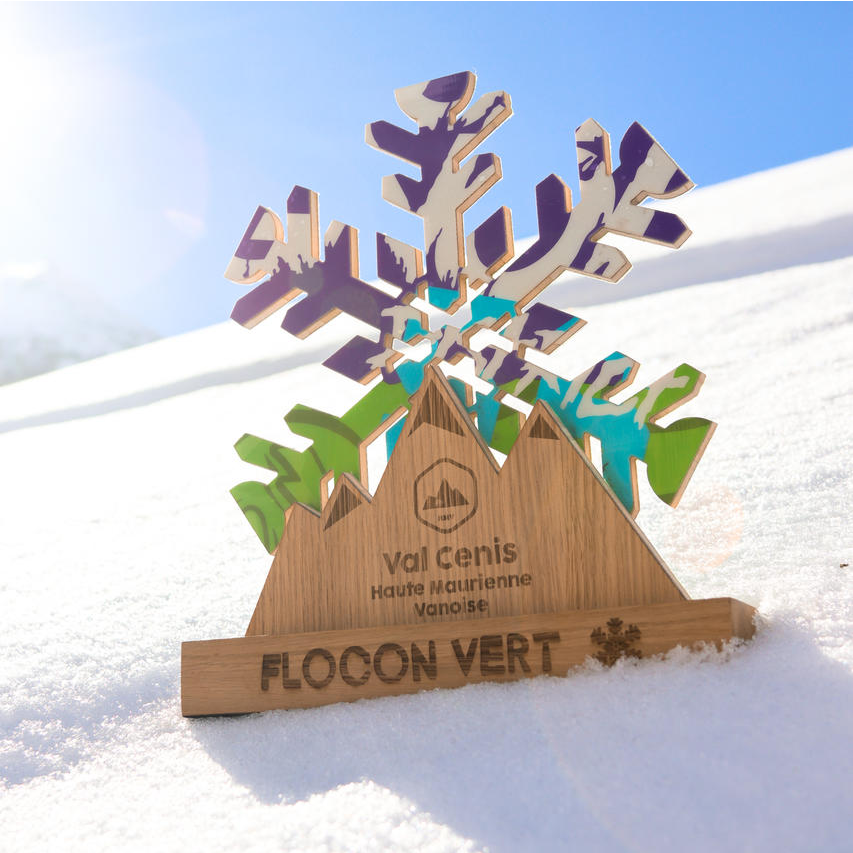
Depuis 2021, Val Cenis est reconnue par le label Flocon Vert, symbole d’un tourisme durable en montagne. Ce label garantit son engagement à travers 20 critères écologiques et sociaux : mobilité douce, gestion responsable des ressources, soutien à l’économie locale, et gouvernance partagée.
En choisissant cette station, les visiteurs contribuent à préserver l’environnement tout en découvrant un patrimoine local riche.
Why preserve high-altitude lakes?

Nature and Ski